

Photon Academy × The Admit Edit

Your grades get you read.
Your story gets you in.

US college admissions for IB students in Singapore — a year-long programme, entered in DP1 or DP2, built around the exam session your school actually sits.

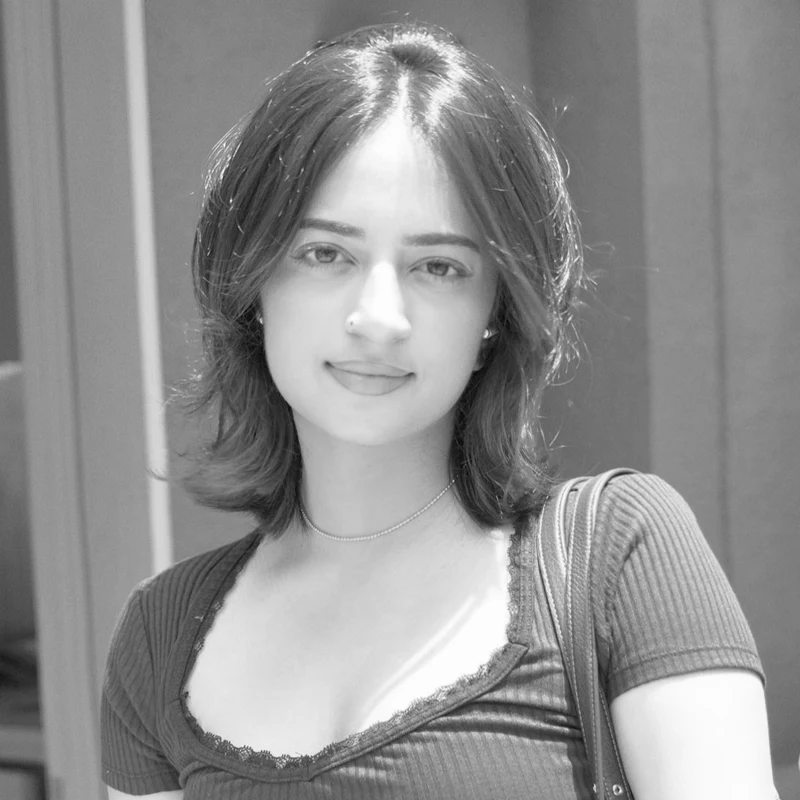
Soha Sunesara, founder of The Admit Edit
Soha SunesaraFounder, The Admit Edit · UT Austin, McCombs School of Business
85%Admitted to a T20 university
30+Universities represented
97+Essays personally developed
1-to-1With the founder, all year

Admissions figures are The Admit Edit’s own record across its US and international students. Photon Academy makes no claim to these results, and neither party guarantees admission to any university.

Where we fit

Four people work on a US application.
Only one decides what it says.

The school counsellorRuns the process — the list, the deadlines, the forms, the recommendations.
The schoolKnows the IB. Delivers the Diploma and the predicted grades.
The tutorHolds the academics up. That is Photon Academy’s half of this.
The Admit EditDecides what the admissions officer understands and remembers about the person behind all of it.

A specialist layer, not a replacement. Most students on this programme keep working with their school counsellor or an existing consultant.

The room you are competing in

In Singapore, a 42 is close to the middle.

Singapore IB students are, on paper, among the strongest applicants in the world. That is the problem, not the achievement — when every file in the pile looks like this one, the numbers stop separating anybody.

2630343842 Global30.58 Singapore35.43 38 SJI Intl (Nov) 39.6 Tanglin 42 a "strong" file

Singapore’s 2025 IB average was 35.43 against a global average of 30.58. Tanglin Trust averaged 39.6; SJI International’s November 2025 cohort averaged 38 across 195 full diploma students. Figures as published by the IB and by the schools. Scores get the file read. They do not decide it.

The operational fact almost no one plans for

Singapore runs two IB calendars, not one.

A May-session parent and a November-session parent are looking at completely different collisions. The shaded area is IB workload. The pins above it are US deadlines.

May session

August → June

UWCSEA (Dover & East) · Tanglin Trust · Dulwich College · Stamford American · Canadian International · Chatsworth · XCL World Academy · GESS · Nexus · Overseas Family School · NPS International · ISS International · Dover Court · EtonHouse Orchard · OWIS Nanyang · GIIS SMART · HWA International

clean window AugOctDecFebAprJunAugOctNovJanMarMay Common App opens 1 Aug1 Nov early deadlines

One clean window in two years, and it is the summer before DP2. The 1 November deadlines then land about ten weeks into DP2, on top of the Extended Essay final and the first IA wave.

November session

January → December

SJI International · ACS (Independent) · ACS (International) · St Joseph’s Institution · Australian International School · Hwa Chong International · School of the Arts (SOTA) · Singapore Sports School · Madrasah Aljunied Al-Islamiah

clean window JanMarMayJulSepNovDecFebAprJunAugNov Common App opens 1 Aug1 Nov — inside IB finals

The 1 November deadline does not fall near IB finals. It falls inside them. Anything that can be finished before September has to be finished before September.

What families underestimate

Most parents think it is one essay.

650 words one personal statement, sent to every school 15–30 supplements · 100–650 words each · most due in the same six weeks

The Common App personal statement is 650 words maximum and goes to every school on the list. Each university then sets its own supplements. A student applying to ten universities typically writes between fifteen and thirty separate pieces, most of them due in the same six weeks.

2026–27 cycle

Less room for context means more weight on the essays that remain.

  • Additional Information cut from 650 words to 300Students used that box as an overflow valve for context that would not fit elsewhere. The escape hatch is now half its old size.
  • The COVID and Community Disruption prompt is retiredReplaced by a permanent Challenges and Circumstances prompt, capped at 250 words.
  • The seven personal statement prompts are unchangedThe sixth cycle running.
  • The application opened on 1 August 2026
On AI

Every applicant has the same model. That flattened prose, not material.

Fluent, correct, well-structured writing is now free — and anything free stops working as a signal. What a model cannot produce is a true, specific detail from one real life that nobody else could have written.

Students cannot retrieve those alone either, because the memories that make the best essays never feel important from the inside. They feel ordinary.

Use the model for grammar. Do not use it for material.

Free · one hour · online

Start with a workshop, not a sales call.

Two sessions hosted by Soha, calibrated for both the May and November cohorts. Nothing to buy, and seats are capped. Dates are not fixed yet — register your interest and we will send the invite and the recording when they are.

For DP1

Build the story before you have to write it.

DP1 students are told they have plenty of time. In the sense that matters, it is the opposite of true. DP1 is the last year in which a student can still build the thing that separates their file. DP2 is only wide enough to write it down.

  • How US admissions differs from the IB mindset of grades and performance
  • What selective universities look for beyond a predicted score
  • Why doing more activities is not the answer — and what is
  • How subject choices, the EE topic, CAS and TOK become narrative material
  • What to prioritise before DP2 begins, and what to do with your break

In the room: two anonymised profiles — a 42 predicted with nine activities and a generic engineering essay, against a 40 predicted with one clear thread. The room votes on who they remember.

Register interest — DP1 workshop

For DP2

About ten usable weeks to decide what it all says.

By DP2 the problem is rarely having nothing to write about. It is having too much and no framework for deciding what belongs where. Most DP2 students discover in mid-October that they have one weak draft and eleven supplements left.

  • What admissions officers are actually trying to learn from an application
  • How predicted grades fit the wider US picture — and how much they do not decide
  • Personal statement versus supplements, and what each is for
  • Why the most impressive experience is often the worst essay
  • What changed this cycle, and how to run US deadlines alongside DP2

Bring your school list and any draft you already have. Every attendee leaves having had something of their own looked at.

Register interest — DP2 workshop
01Free workshop
021:1 Application & Narrative Evaluation
03DP1 or DP2 programme
Programmes

Two ways in — DP1 or DP2.

Students join for a full year, one-to-one over Zoom on Singapore time, beginning with a free 30-minute consultation for student and parents together.

01

DP1 — The Foundation Year

A year spent finding the through-line, auditing the activities that are not earning their hours, choosing an Extended Essay and CAS portfolio for what they prove, and keeping a running record of the work as it happens. The summer is mapped against the gaps, and drafting begins before DP2 opens — so the final year starts with a real personal statement already in hand.

Why earlyStarting early does not mean writing early. It means arriving at DP2 with the story already found and the evidence already built.
02

DP2 — The Application Year

Four levels, each including the one before. The Draft Edit takes an existing draft through three rounds — structure, then story, then voice. The Statement Edit starts from a blank page, with brainstorming and a detailed outline first. The Application Edit adds supplements for up to three universities, “why us” essays and activities-list strategy. The Admit Edit covers unlimited supplements, recommendation-letter support, recorded mock interviews, and deferral and waitlist letters.

SchedulingBuilt around your IA and EE dates, so you are never writing a personal statement the week an Extended Essay is due.
03

What is not included

SAT and ACT preparation, and school subject selection. This programme is narrative and strategy. The academic side — HL and SL choices, subject teaching, predicted grades — is Photon’s half of the table.

FeesPriced per year, depending on entry point and level of support. Discussed at the free consultation and invoiced by Photon Academy in Singapore dollars.
What the year actually looks like

Nobody is handed a prompt and left to it.

The work is guided from the first conversation to the last submission. Here is the shape of it.

DP1 — a year of checkpoints, not a single deadline

Each marker is a session or a piece of work reviewed together. The extraction conversations repeat, because the material rarely surfaces the first time.

Consultation30 min, parentsand studentExtractionLong conversations,repeatedActivities auditEvery commitmentreviewedEE and CASChosen for whatthey proveSummer mappedAgainst the gaps,before it startsFirst real draftFinished beforeDP2 opens A shared record runs underneath all of it — added to through the year, read and pushed on as it fills

DP2 — each level contains the one before it

The four levels are nested rather than parallel, so choosing a higher level never means losing the work of a lower one.

The Draft EditThree rounds: structure, story, voiceDraftThe Statement EditFrom a blank page, outline firstStatementThe Application EditSupplements for three schoolsApplicationThe Admit EditUnlimited supplements, interviews, waitlistAdmit Choosing a higher level never means losing the work of a lower one

Every draft comes back

The student writes and Soha responds, in rounds, with a live session and written commentary each time. You are never waiting until the end for someone to fix something.

Student The Admit Edit You writefirst draftSohastructure roundYou rewriteon her notesSohastory roundYou rewriteagainSohavoice roundYoufinal polishSohapre-submit review

Between rounds there is direct access rather than a coordinator, and the student keeps the pen throughout — nobody here writes a student’s essay for them.

Track record

Where her students have ended up.

Universities where The Admit Edit's students have been admitted, including NYU Stern, Penn Dental Medicine, Emory, UT Austin, USC, Dartmouth, Carnegie Mellon, UCLA, UC Berkeley and Georgia Tech

Admissions outcomes achieved by The Admit Edit with its own students, across undergraduate and health professions admissions. Photon Academy makes no claim to these results, and neither party guarantees admission to any university.

“She helped me craft a unique essay that would stand out — she truly helped me think deeper and reflect on the experiences that shaped me.”Student recommendation · The Admit Edit

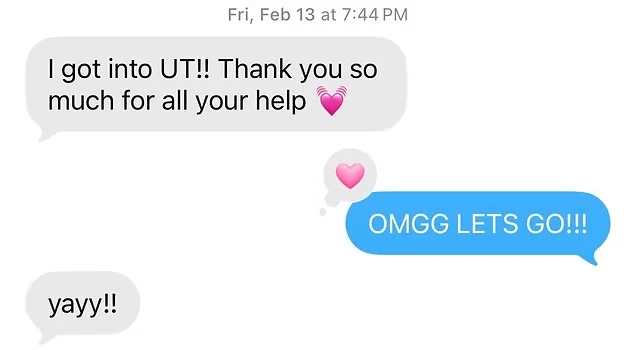
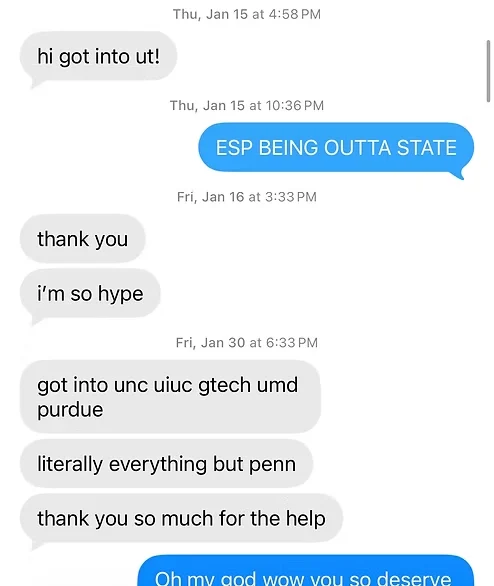
Student messages listing admissions to UNC, UIUC, Georgia Tech, UMD and Purdue
Student message: I got into Berkeley and UCLA
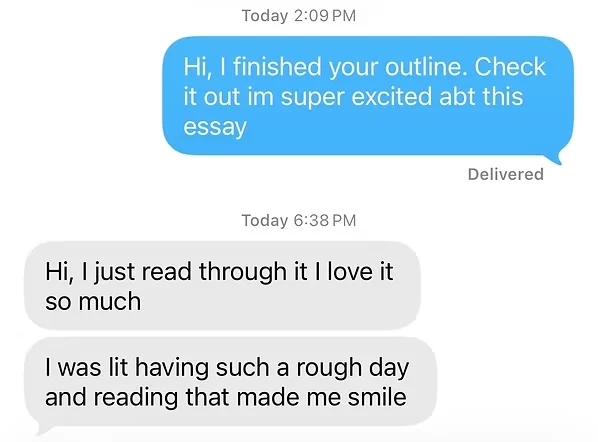
Student message about an essay draft

Messages and recommendations received by The Admit Edit and published on theadmitedit.com. Students are not named.

Soha Sunesara
Who you work with

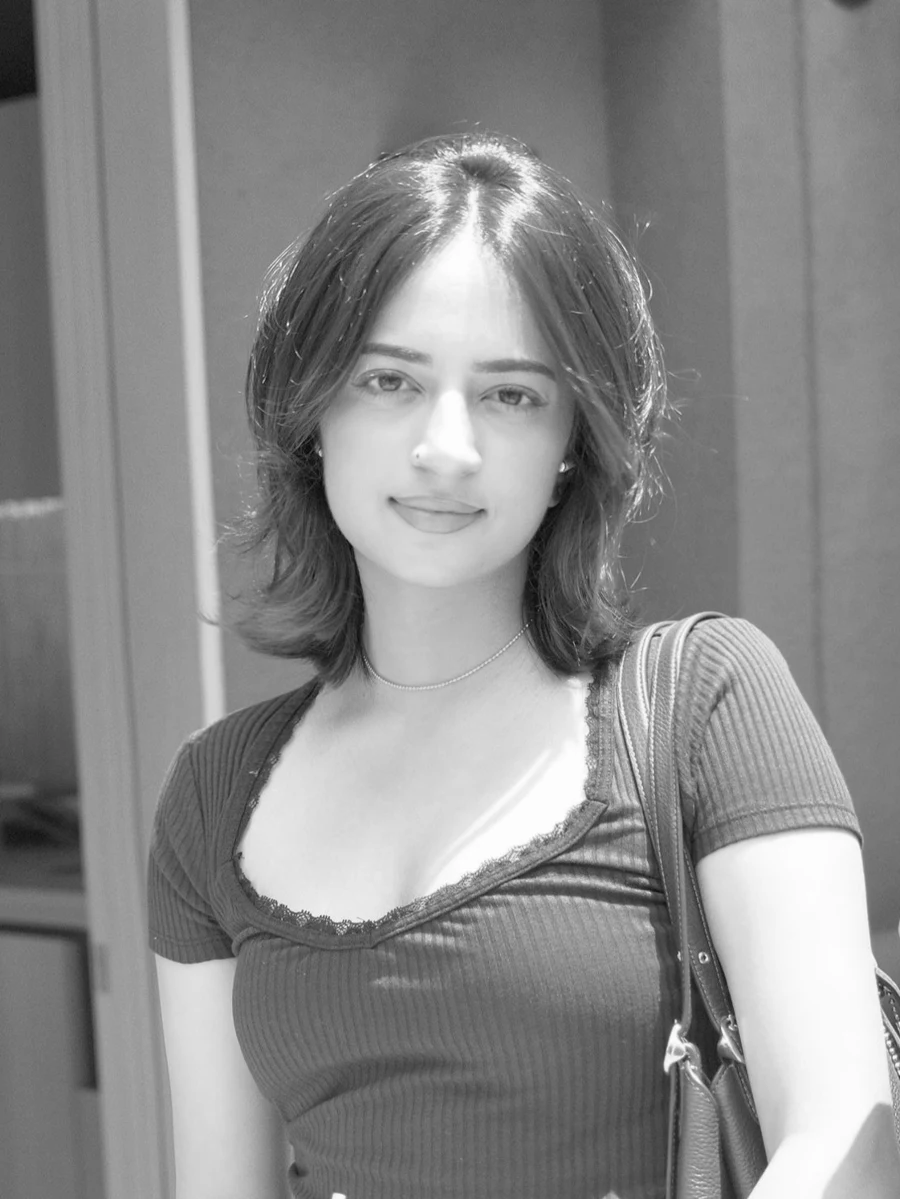
Soha Sunesara

Founder, The Admit Edit

A Texas native and the founder of The Admit Edit, a college essay and storytelling consultancy. Her work is built on story extraction — drawing out the details and reflections students struggle to articulate on their own, then helping them turn those into writing that is specific and genuinely theirs.

She started the practice after seeing how much stronger student writing became when someone asked the right questions and gave them room to answer.

UT AustinMcCombs, Finance
Deloitte ConsultingNew York
Boston Consulting GroupIncoming
Questions

Questions parents actually ask

You may not need another college counsellor, and that is not what this replaces. The Admit Edit works alongside existing counsellors and consultants as a specialist in storytelling, narrative development and essays — going deep on what the application actually communicates about your child. Most consultants carry a full roster through application season, and the extraction work takes hours per student and does not scale, which is exactly why it tends to be the piece that gets compressed.

Not the way this works. By the time sentences are being changed, most of the job has already happened. The bulk of the time goes on extracting stories, questioning assumptions, chasing details students dismiss as unimportant, and working out which experiences actually reveal something. Strong writing matters, but choosing the right story comes first — and that is the part almost nobody does well.

They can, and so can every other applicant, which is the problem. What AI has made free is fluent, correct, well-structured prose — and anything free stops working as a signal. What a model cannot produce is a true, specific detail from one real life that nobody else could have written. Students cannot retrieve those alone either, because the memories that make the best essays never feel important from the inside. Use the model for grammar. Do not use it for material.

In Singapore that is close to the median of the room you are competing in. Singapore’s 2025 IB average was 35.43 against a global average of 30.58; Tanglin averaged 39.6 and SJI International’s November cohort averaged 38. A US reader opening your child’s file has seen several that morning with the same numbers, the same HL combination and a comparable activity list. Scores get the file read. They do not decide it.

Yes, and this is the question most families get wrong. At a May-session school such as UWCSEA, Tanglin or Dulwich, the only genuinely clean window is the June to August break between DP1 and DP2 — DP2 starts in August and early deadlines are in November, about ten weeks that already contain the Extended Essay final and the first IA wave. At a November-session school such as SJI International, ACS (Independent) or Australian International School the situation is harder: the November early deadlines fall within IB finals, so anything not finished by September gets written by an exhausted student in the worst two weeks of the whole programme.

No. The work simply changes shape. Instead of building experiences over time, we extract the strongest material that already exists, settle the narrative, develop the personal statement, and approach the supplements strategically rather than one at a time.

They do not need one. There is no correlation between how eventful a life is and how good the essay is — some of the strongest work comes from students who were certain at the start that nothing had happened to them. The process is designed to find the experiences that reveal how a student thinks, notices, changes or moves through the world. A student saying this is a sign the extraction has not happened yet, not that there is nothing to extract.

That is normal, particularly in DP1, and there is no need to manufacture a career narrative at sixteen. We look for genuine intellectual interests, recurring behaviours and experiences that give the application direction without pretending the student has their life planned. A convincing sense of curiosity reads better than a fabricated sense of certainty, and readers can tell the difference.

More than most families expect. The Common App personal statement is one 650-word essay that goes to every school; on top of that each university sets its own supplements. A student applying to ten schools typically writes between fifteen and thirty separate pieces, from 100 to 650 words, most of them due in the same six weeks. One change worth knowing this cycle: Additional Information was cut from 650 words to 300, and the old COVID question was replaced by a Challenges and Circumstances prompt capped at 250.

No, because that is precisely how applications become generic. Admissions readers have seen the ideal applicant thousands of times and are bored of him. The goal is to work out what is genuinely interesting about your child and communicate it strategically.

The work is not standardised, because it cannot be. Students are not moved through an essay-editing pipeline. The test of whether it worked is that the final application is more recognisably theirs, not more recognisably the consultant’s.

A conversation, and mostly one where Soha is asking and your child is talking — no worksheets and no prompt list. It covers experiences, activities, interests, important moments and seemingly random memories, following what the student says rather than a script. Most students find the first twenty minutes uncomfortable and the last twenty surprising.

Both morning and evening slots are kept open, so there are plenty of times when Singapore and US schedules overlap. Everything is one-to-one over Zoom.

A free workshop if one is running, or a 30-minute consultation to discuss your child’s profile, school, timeline and goals — including how the programme would support them, with relevant examples from past students.

Register your interest

Tell us where your child is, and we will tell you what we would do.

One form covers the free workshops, the 1:1 evaluation and the year-long programmes. Nothing is charged at this stage and there is no obligation to continue.

  • We reply within 24 hours, on Singapore time.
  • Workshop dates are not fixed yet — registering puts you on the invite list and gets you the recording.
  • The 30-minute consultation is free, and we recommend both parents and student join.
  • Your details are used only to contact you about this programme, and are never passed to anyone else.

Prefer to message?
WhatsApp +65 9712 4269 →

Exam session *
What are you interested in?

Free to register. No payment details are collected on this form, and we will never ask for them by email.

Explore More

Support Your Application from Both Sides

Protect the predicted grades your offer depends on:

Applying to medicine or dentistry?

There is a separate health professions admissions track for students applying to medical and dental programmes. Mention it at your consultation and we will route you to the right programme.